
Sometimes a movie reaches into your chest when you least expect it.
Horror films earn their scares with your consent. You bought the ticket, you knew what you were walking into. But every now and then a comedy, a kids’ movie, or an action film drops something genuinely horrifying into the middle of your afternoon and just keeps going like nothing happened. Those are the ones that stick. You can’t prepare for them. You can’t un-see them.
Here are ten of the best, in order of escalating damage.
1. Home Alone (1990): The Furnace
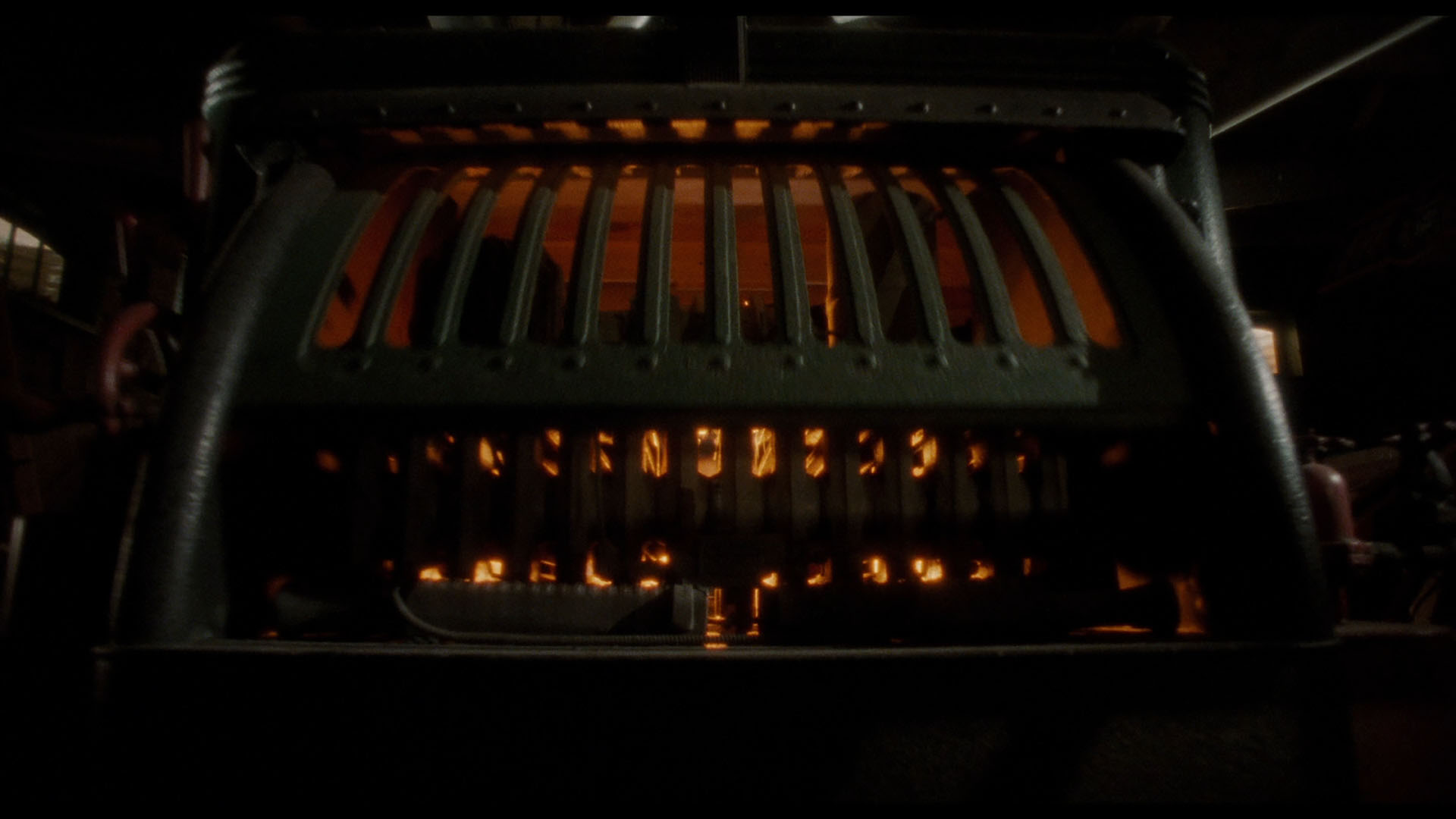
The furnace in the McCallister basement is an old coal-fired gravity unit, the kind with ductwork radiating out from the top like tentacles. The movie dresses it up with glowing red eyes, a gnashing metal grate for a mouth, and a growling voice that calls Kevin’s name. It is absolutely a real thing that would have been in that house, and the filmmakers made it look like a face on purpose, and they were right to do that because it IS a face and it IS going to eat you.
Chris Columbus originally storyboarded a full sequence where the furnace rips out of the wall, gets on all fours, and chases Kevin up the stairs. The budget couldn’t cover the roughly $1 million in effects, so we got the stationary roaring version instead. The stationary version is fine. The stationary version works. Kevin eventually shouts “Shut up!” at it and it goes quiet, which is the movie’s turning point: the moment he stops being afraid of his own house. But for those of us who met that furnace at age seven, the turning point came a little later.
2. Willy Wonka & the Chocolate Factory (1971): The Boat Tunnel
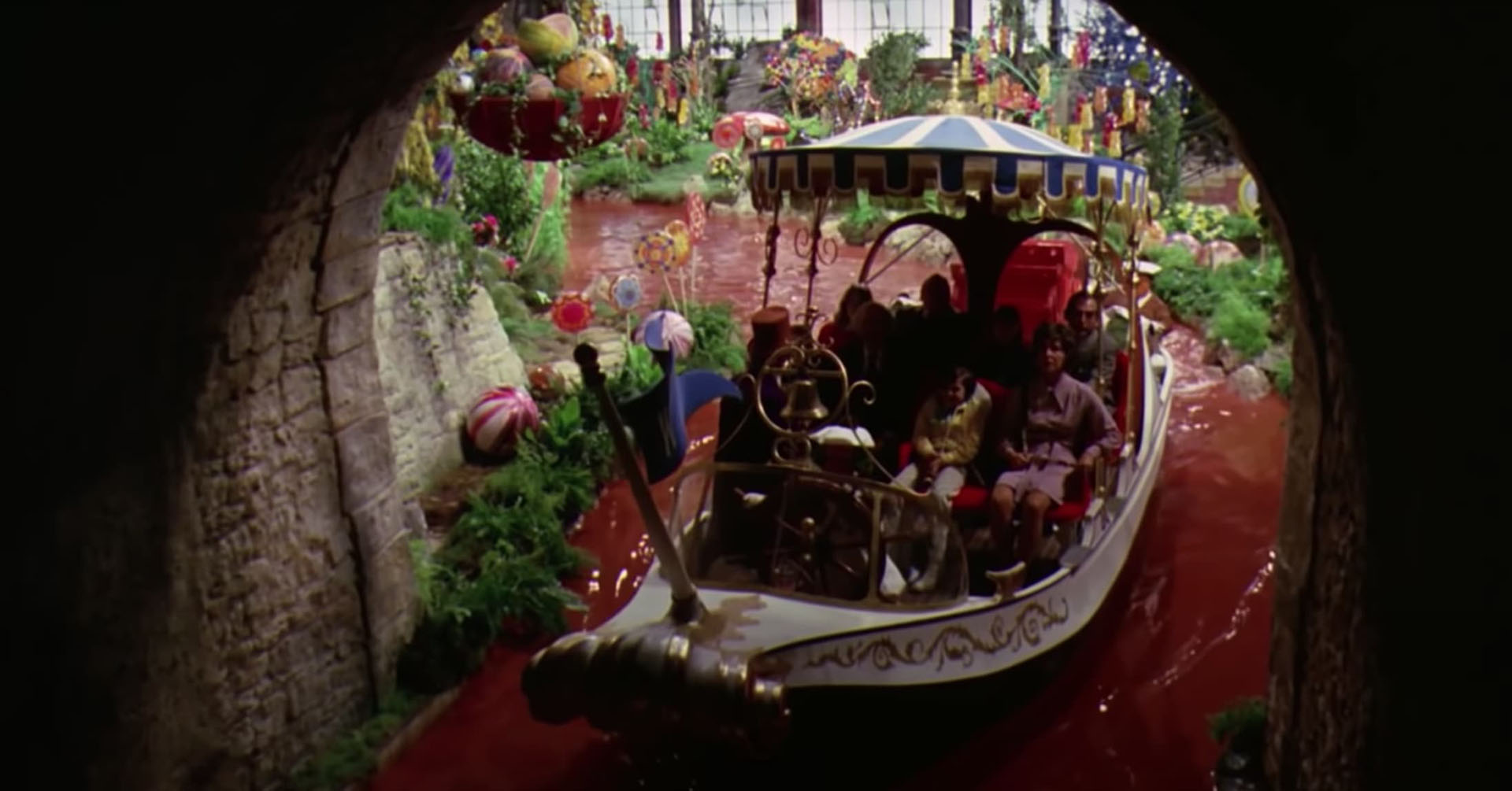
Two minutes. That’s all it is. The SS Wonkatania enters a dark tunnel, the Oompa-Loompas start rowing faster, and Willy Wonka begins reciting a poem while projected imagery flashes on the walls: a millipede crawling across a human face, a chicken being decapitated, a worm on what appears to be a corpse, a giant close-up of a human eye. Gene Wilder’s voice rises and the children around him start screaming and he does not stop.
The actors didn’t know it was coming. Director Mel Stuart deliberately kept everyone in the dark about the intensity of Wilder’s delivery. Julie Dawn Cole (Veruca Salt) said her chin dropped and never came back up. Denise Nickerson (Violet Beauregarde) confirmed there was no acting involved in her reaction. The fear on those kids’ faces is real, and somehow that makes it worse.
The poem is Roald Dahl’s. The screenwriter who rewrote Dahl’s original script without credit was David Seltzer, who later wrote The Omen. Make of that what you will.
3. Pee-wee’s Big Adventure (1985): Large Marge
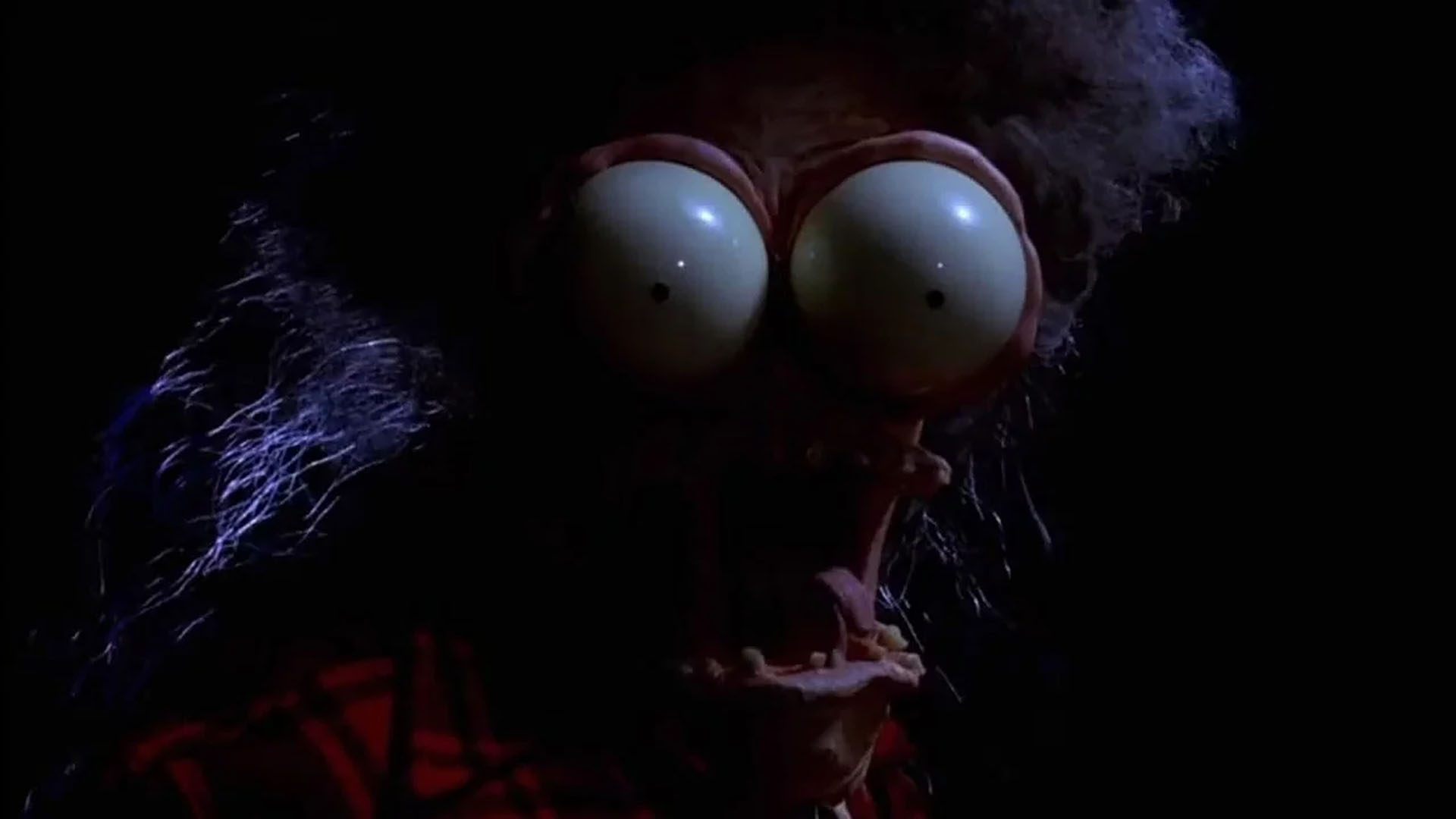
Pee-wee hitchhikes, gets picked up by a truck driver named Large Marge, and listens to her describe the worst accident she ever saw. “And when they finally pulled the driver’s body from the twisted, burning wreck,” she says, turning to face him, “it looked like… this.” Her face becomes a stop-motion clay nightmare: bulging cartoon eyes, rotted brown teeth, something that used to be human and isn’t anymore.
The transformation is three seconds of claymation built by the Chiodo Brothers, the same practical effects team behind Killer Klowns from Outer Space. Tim Burton hired them specifically after seeing their work on his short film Frankenweenie. Large Marge is played by Alice Nunn, who died in 1988 and never got to see herself become one of the most referenced jump scares in cinema history.
The kicker: Pee-wee finds out at the roadside diner that Large Marge died in that crash ten years earlier. She was describing herself. She was the body in the wreck. Tim Burton’s first feature film is a comedy about a stolen bicycle that also contains a ghost story perfectly executed.
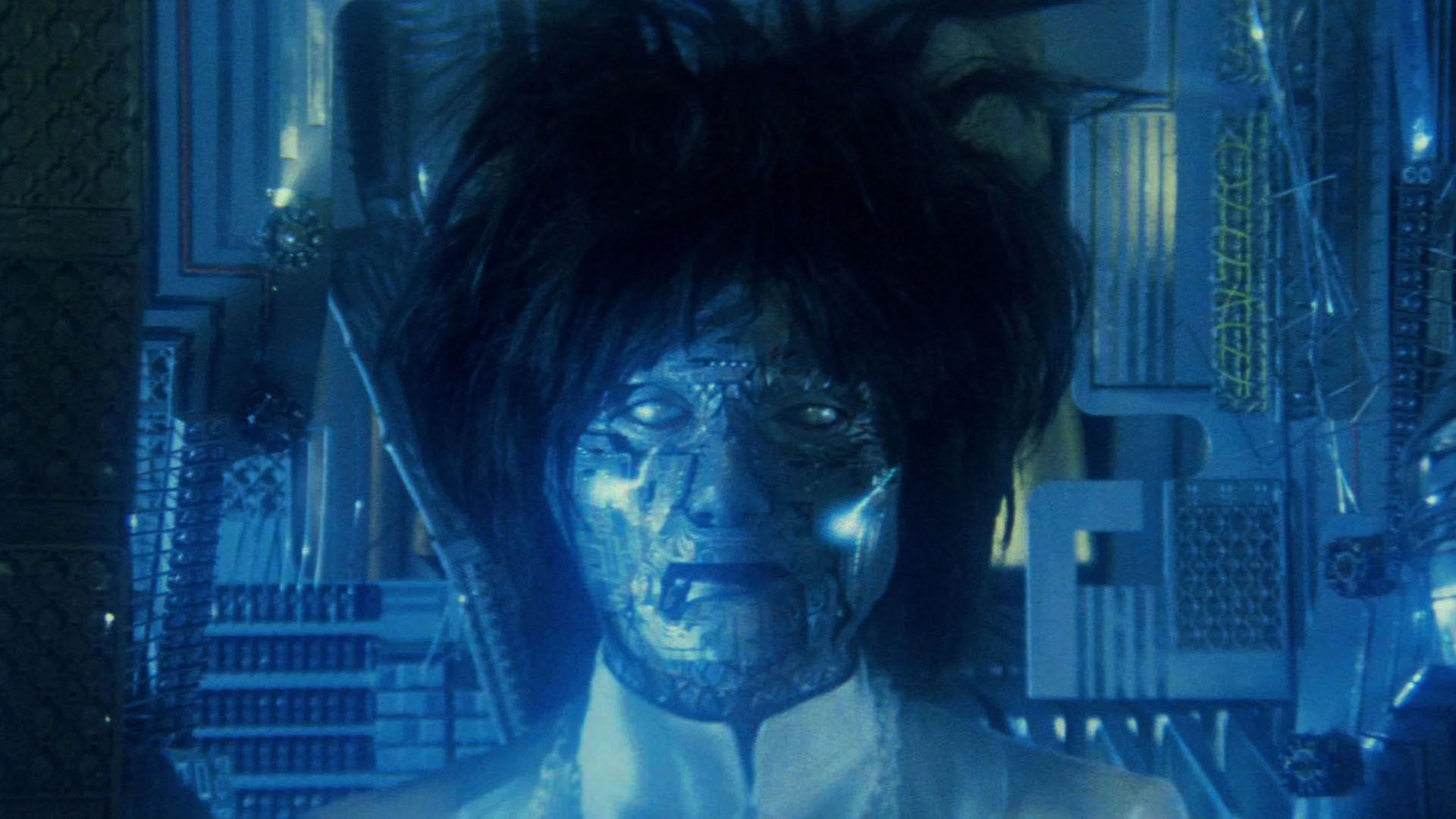
4. Superman III (1983): Vera Webster Becomes a Machine
Superman III is a comedy. Richard Pryor is in it. There are pratfalls. And then, in the final act, a woman named Vera Webster runs for a door and is pulled back by computer lasers, and metal parts are grafted onto her face and arms while she screams, and her eyes snap open silver, and she walks stiffly out of the smoke firing energy beams from her fingers.
Vera is played by jazz legend Annie Ross (Lambert, Hendricks & Ross), and her commitment to the scene is the whole thing. She is genuinely terrified in a way that the rest of the film never asks anyone to be, and it lands like a foreign object dropped into what should have been a safe Saturday afternoon. The cyborg design predates Tetsuo: The Iron Man by six years and the Borg by four. Every kid who saw this in theaters carries the shot of those silver eyes somewhere in their nervous system.
You couldn’t cut this scene if you tried. It doesn’t fit the film around it at all, and that’s exactly why it works.
5. Ace Ventura: Pet Detective (1994): The Shark Tank
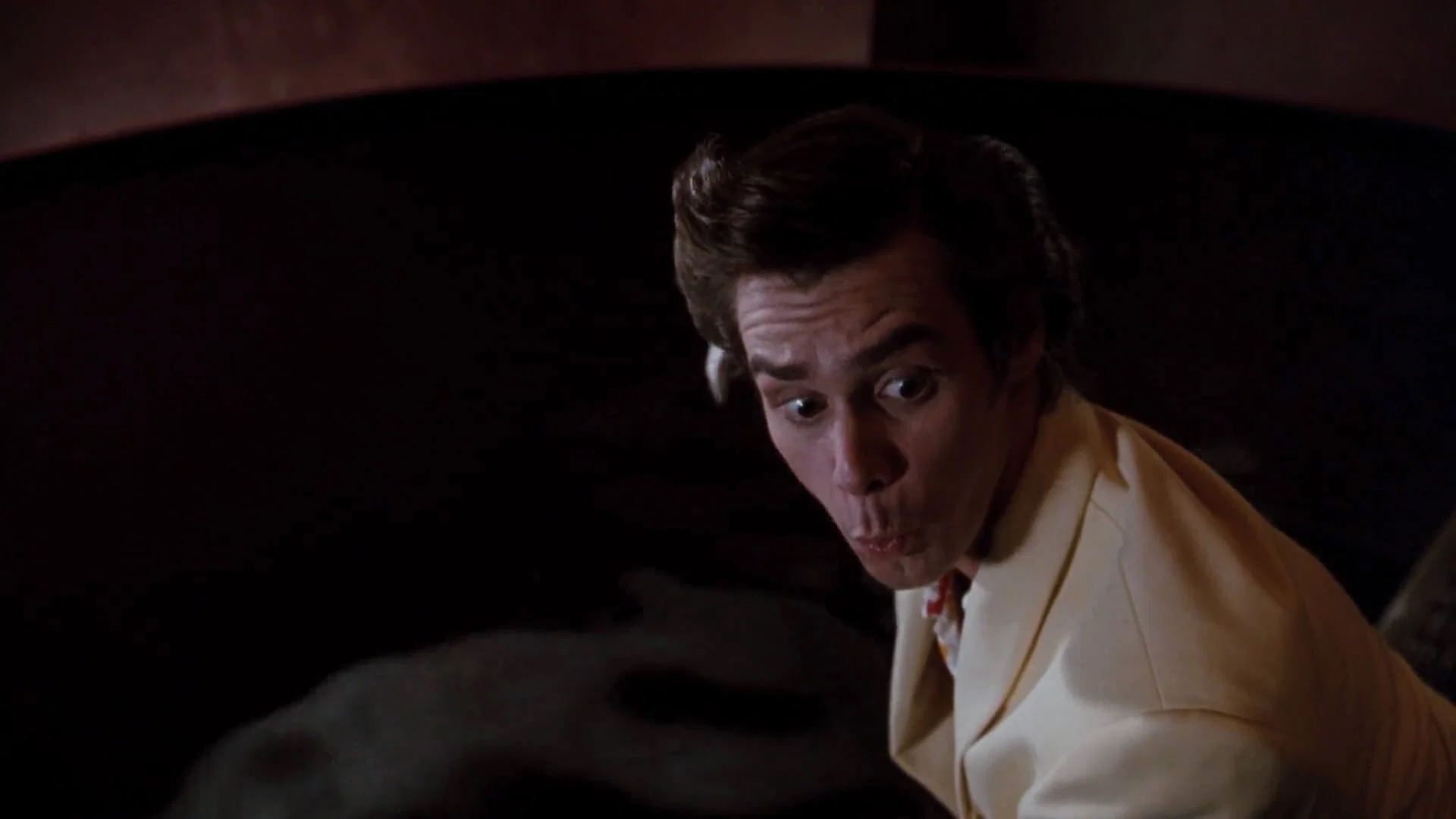
Ace Ventura is at a black-tie gala investigating a dolphin kidnapping. He slips away, dangles a fish over a private aquarium tank, and a great white shark comes out of the water at him. He thrashes free, drips back into the party, and plays it off. The scene lasts maybe ninety seconds and is played entirely for laughs. It is also genuinely terrifying because the animal is enormous and it comes out of nowhere and Jim Carrey’s panic is not entirely performed.
The shark was almost certainly animatronic for the close contact shots: great whites can’t be kept in captivity. But the tank is real, the water is real, and the scale of the thing is real, and the comedy framing does absolutely nothing to soften it because your nervous system does not care about genre.
The rest of Ace Ventura is broad rubber-faced slapstick. The shark scene is a nature documentary about what happens when a human being gets into the wrong water.
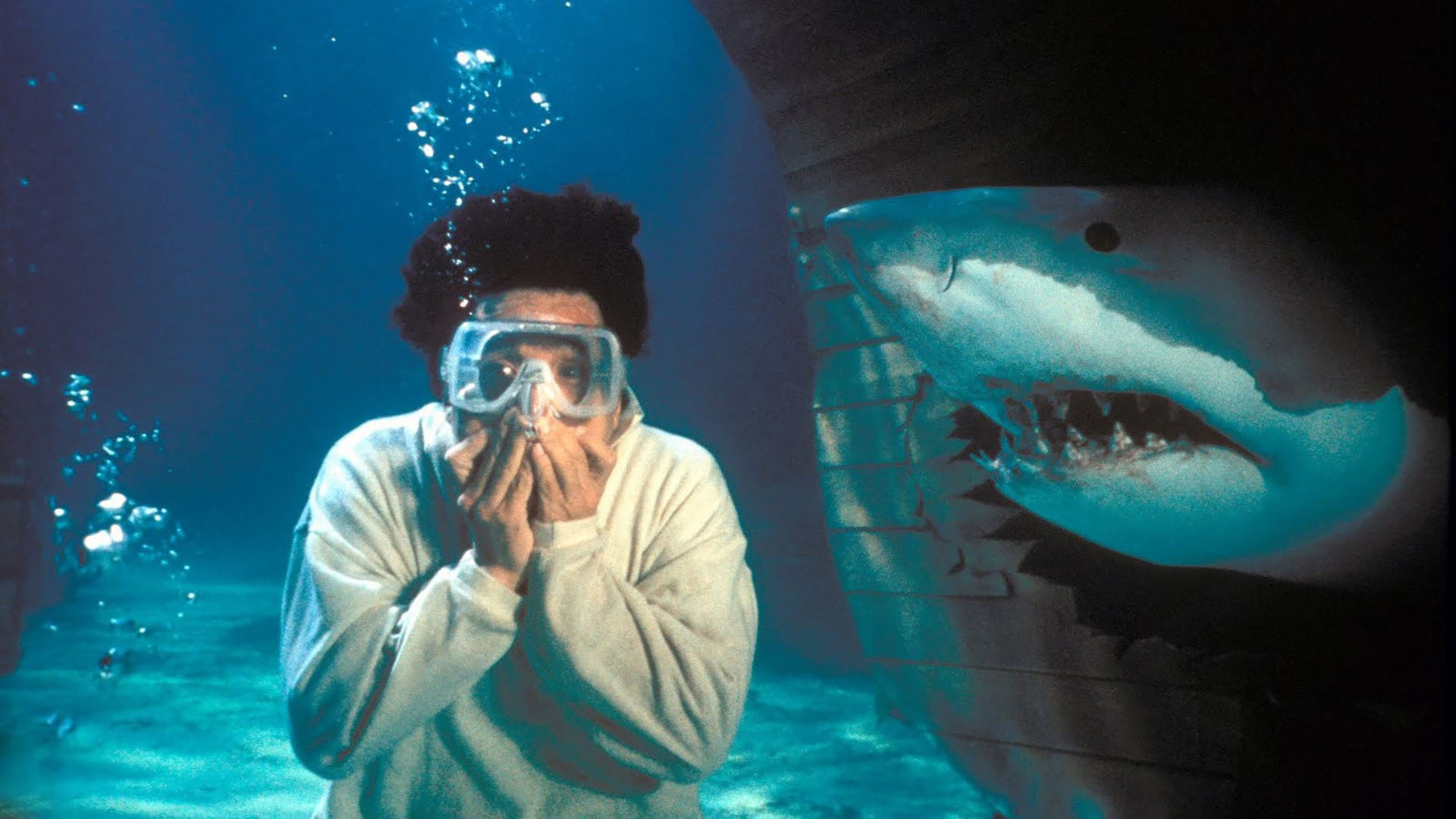
6. First Strike (1996): Shark in the Restaurant
Jackie Chan’s First Strike (also known as Police Story 4) is a James Bond parody starring Jackie Chan as a Hong Kong cop who ends up fighting Russian arms dealers in Australia. It is a comedy action film. It also has a scene where a great white shark is released into a public aquarium restaurant when the tank glass is shattered, and Jackie has to save the tourists while the shark moves freely through a space where people were just eating lunch.
The aquarium is real: UnderWater World in Mooloolaba, Queensland, with an 80-metre shark tunnel and a 2.5-million-litre oceanarium. The underwater fight sequence preceding the release features real sharks circling real stunt performers. The “great white” in the restaurant was almost certainly a mechanical rig: like Ace Ventura‘s tank, great whites can’t survive in captivity. But the grey nurse and leopard sharks in the earlier sequence are confirmed live animals, and the outtakes confirm that injuries occurred during production.
There is something specifically wrong about a shark in a restaurant. Sharks in the ocean are nature. Sharks in a restaurant are a category error, and the human brain reacts to category errors with something very close to horror.
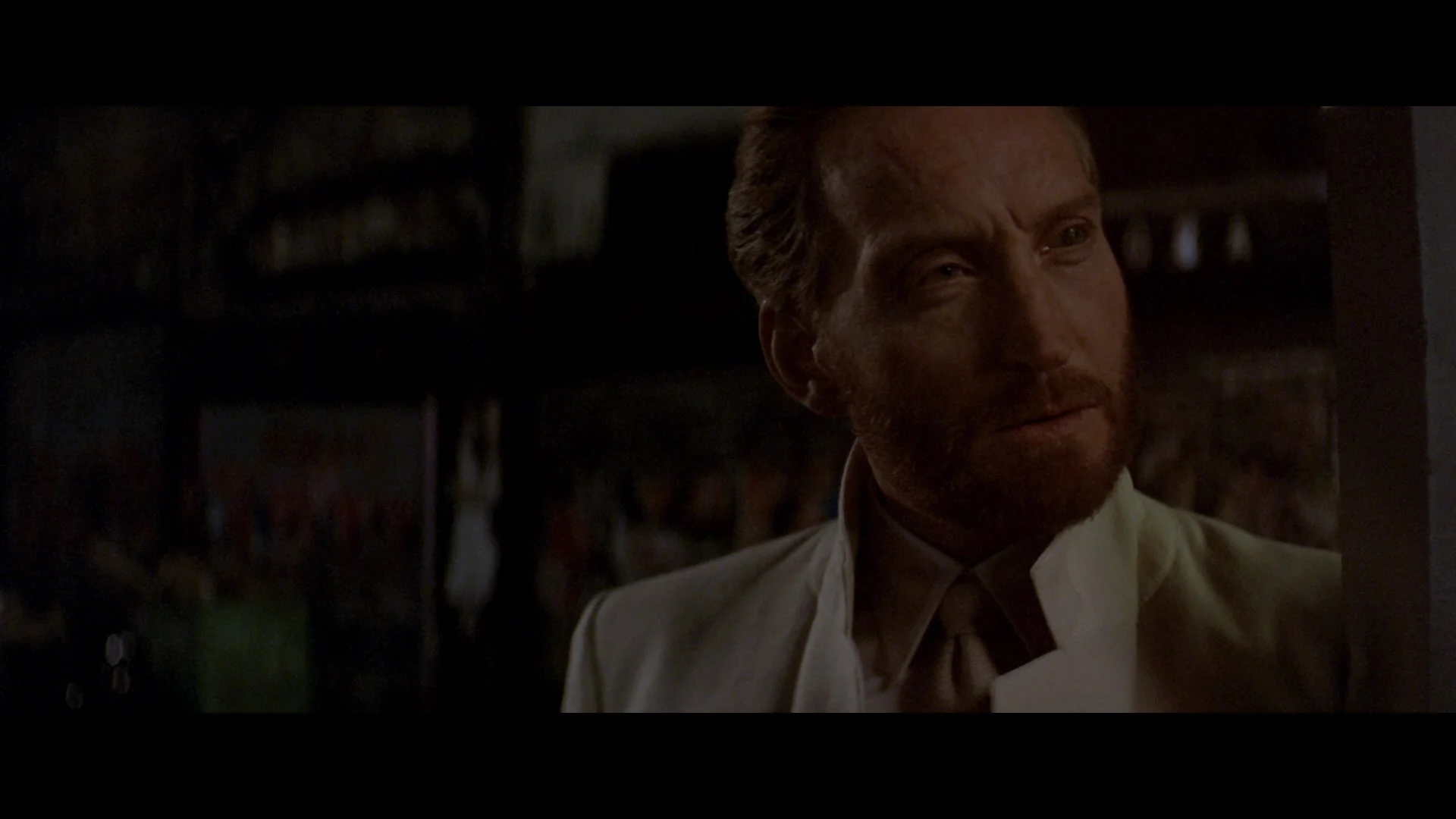
7. Last Action Hero (1993): Benedict Knows About Freddy
Last Action Hero is a meta action comedy from 1993 that flopped catastrophically and has been quietly correct about everything ever since. The horror moment is actually two moments.
The first: early in the film, Benedict (Charles Dance, magnificently sinister) and Danny pass a video store in the real world. In the window is a cardboard standee of Freddy Krueger. Benedict stops. He looks at it. He recognizes something in it: a kindred spirit, or a template, or a possibility. It lasts about two seconds and it is quietly the most unsettling thing in the film.
The second: in the climax, Benedict reveals his plan. He has the magic ticket that lets fictional characters cross into the real world, where, as he points out, the bad guys can win. His proposed guest list:
“We’ll have a nightmare with Freddy Krueger, have a surprise party for Adolf Hitler, Hannibal Lecter can do the catering, and then we’ll have a christening for Rosemary’s Baby!”
It’s played as a villain monologue and it is also a genuinely terrifying premise: all of cinema’s worst nightmares, freed from the rules of their respective genres and dropped into a world with no plot armor for the heroes. The movie doesn’t follow through on it. It should have.
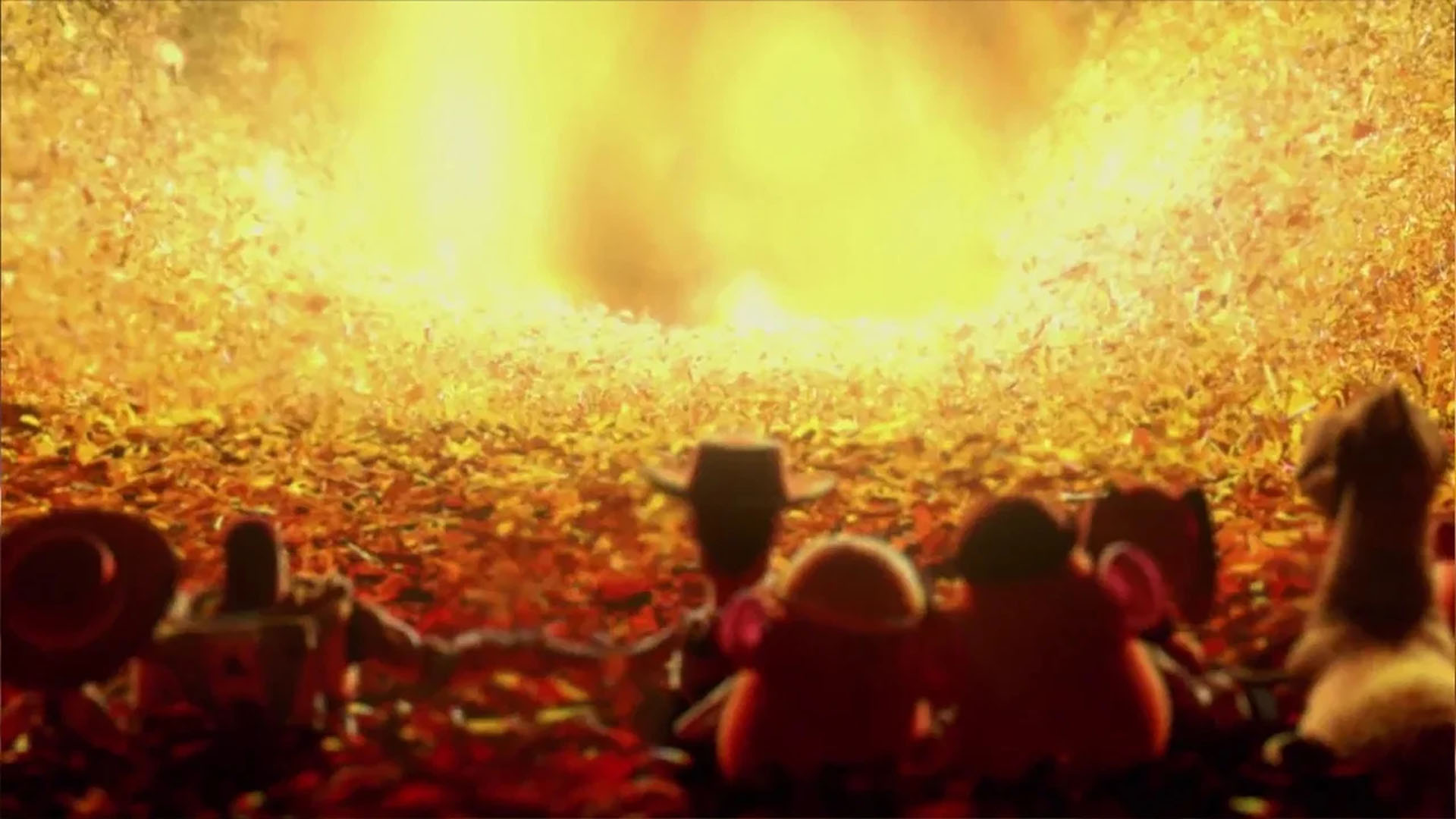
8. Toy Story 3 (2010): The Incinerator
The toys end up on a conveyor belt heading toward an industrial incinerator. The belt moves faster. The drop approaches. Lotso, who could stop it, abandons them. Buzz takes Jessie’s hand. Every toy joins the chain. They close their eyes. They accept it. Woody reaches for something and finds nothing. They face the fire together in silence.
This is a Pixar film rated G. The audience at this moment includes children who are five years old. Director Lee Unkrich has confirmed that toys can die, and that the incinerator would have been the end. The Little Green Men operating the claw save them, but only after roughly sixty seconds of everyone in the theater having quietly prepared themselves for the death of characters they have known since 1995.
There is an alternate cut that goes straight from the incinerator to the credits. Unkrich said it was assembled as an internal joke about runtime. I believe him about the joke. I do not believe anyone in that editing room was laughing.
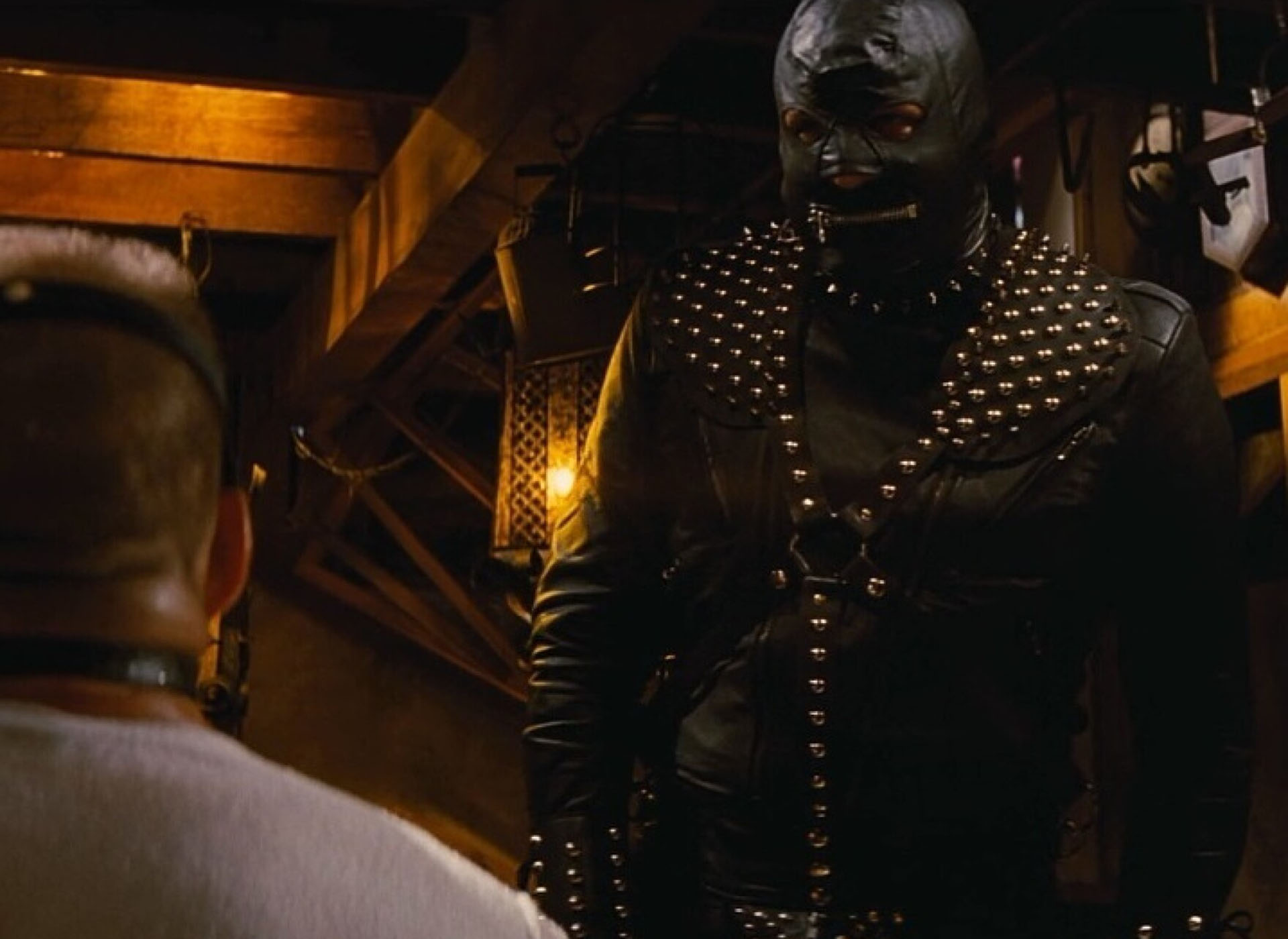
9. Pulp Fiction (1994): The Basement
Pulp Fiction is a crime film. It’s stylish and funny and literary and people quote it at parties. And then Butch and Marsellus end up in the basement of a pawn shop owned by two men named Zed and Maynard, and there is a man in full leather bondage gear kept in a box in the wall on a leash, and Zed takes Marsellus into the back room, and Pulp Fiction becomes a different movie entirely for about four minutes.
The Gimp was played by Stephen Hibbert, a Groundlings comedy writer who spent three days in leather filming the sequence. Tarantino has confirmed on record that the Gimp was a hitchhiker Zed and Maynard picked up seven years earlier and “trained to be the perfect victim.” Hibbert played him as someone whose tongue had been removed. He dies when Butch knocks him out and he hangs from his own leash.
Tarantino himself said:
“Part of the fun of Pulp is that if you’re hip to movies, you’re watching the boxing movie Body and Soul and then suddenly the characters turn a corner and they’re in the middle of Deliverance. And you’re like, ‘What? How did I get into Deliverance?'”
Maynard actor Duane Whitaker confirmed he auditioned doing Deliverance broadly and Tarantino redirected him to “Orange County Sheriff, just real calm, all business,” because what’s scarier than someone who’s done this before and treats it like a Tuesday.
The tonal whiplash is the horror. You were not prepared. That’s the whole point.
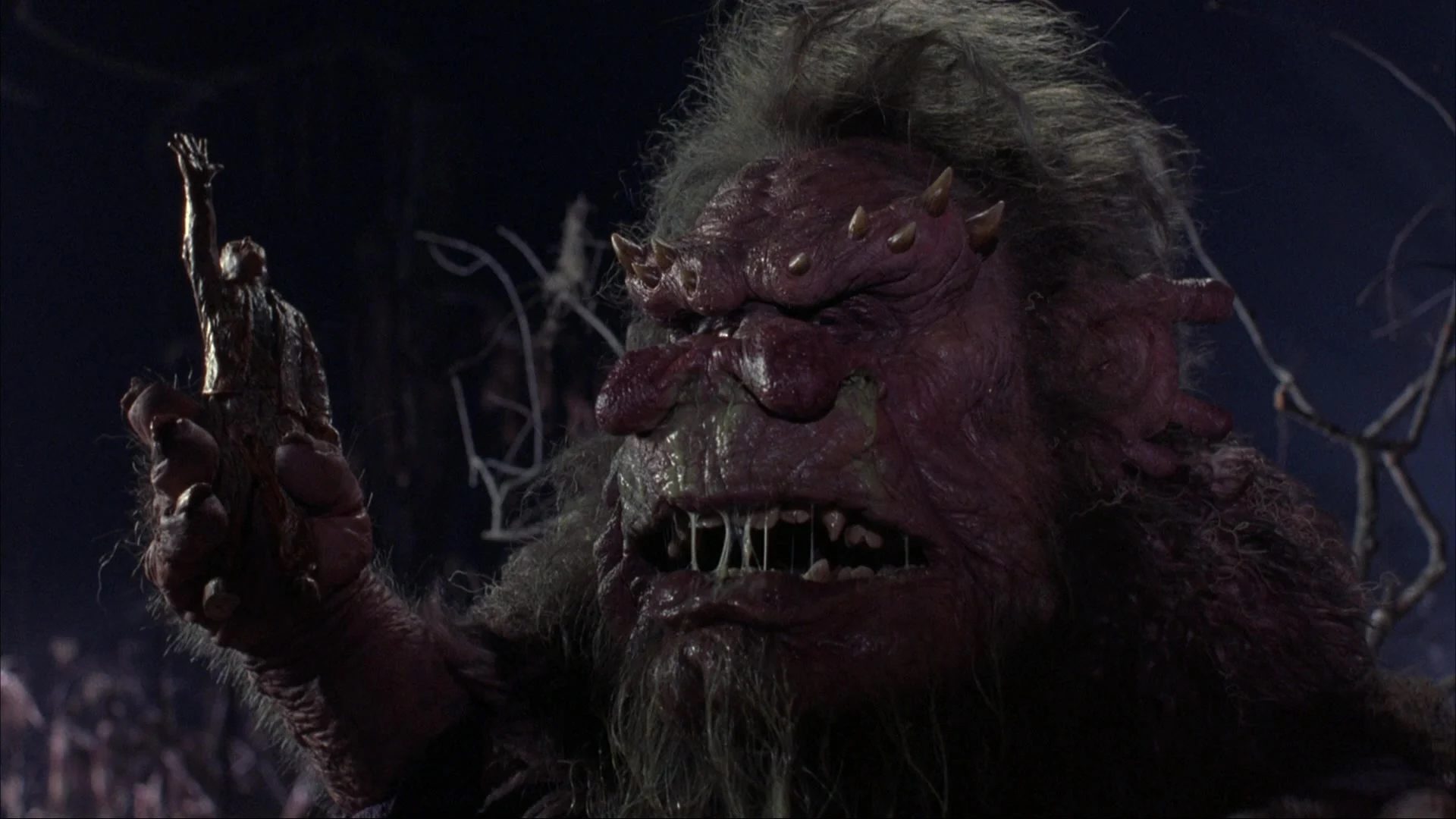
10. Ernest Scared Stupid (1991): An Honorable Mention and a Confession
I’m bending my own rules here and I know it. Ernest Scared Stupid is technically a scary movie: it has a troll, children get taken, there are scenes filmed with horror grammar. But it was produced by Touchstone, marketed as a family comedy, and sold as the fourth Ernest P. Worrell picture. Jim Varney is in it. It should not work as horror.
It absolutely works as horror.
The troll Trantor was designed and built by the Chiodo Brothers, the same team behind Large Marge (#3 on this list) and Killer Klowns from Outer Space, and the creature design is genuinely, unambiguously frightening: asymmetrical, wet-looking, wrong in a way that practical effects achieve and CGI still hasn’t. The film shoots Trantor with completely different visual language than the Ernest material: moody lighting, fog, Dutch angles, extreme close-ups. The “under the bed” scene, where a child checks under the bed, finds nothing, rolls over, and Trantor is in the bed beside her, is a straight Hammer sequence dropped into a PG comedy.
The premise underneath the slapstick is that Trantor captures children and traps their souls inside wooden dolls for eternity. Not kills them. Traps them. That is worse than death, and the PG rating forced the filmmakers into it, and it backfired into something much darker than anyone intended.
Eartha Kitt is in this movie. The Chiodo Brothers are in this movie. The movie is rated PG and stars Ernest P. Worrell. The movie traumatized a generation of children and it deserved to.
💜 Now if you’ll excuse me, I have fog to walk into.
Support Halloween Love
If an item was discussed in this article that you intend on buying or renting, you can help support Halloween Love and its writers by purchasing through our links:
