
Ask a Suffolk magistrate in 1645, and he would have said yes without pausing, with a name already in mind for you. Ask a London barrister ninety years later, and he’d have explained, patiently, that only a liar claims such powers. Today the answer comes back hedged: a shrug that turns into a quiet yes once you ask what the person actually means by it.
Same question every time. What kept changing was who had the standing to answer it, and what it cost you to land on the wrong side of their answer.
These days the question tends to come up at two in the morning, half seriously, usually because something in your life has stopped making ordinary sense. That’s the version people take to tarot readers and psychics on platforms like Nebula, where the point is room to think rather than a ruling. The older answers are still worth having, if only for how far they moved.
The Century the Courts Said Yes
From the middle of the 1400s onward, for about three hundred years, witchcraft sat in European law books as a crime you could be charged with, tried for, and hanged for. Brian Levack’s estimate of 40,000 to 60,000 executions is the figure historians still reach for, though like every number from the period, it depends on court records that survive well in one region and barely at all in the next. The accused were overwhelmingly women, and mostly women with little standing to lose: widows, the old, and the poor of the parish.
England produced its own specialist. Matthew Hopkins, who styled himself Witchfinder General, worked in East Anglia from 1644 to 1647, paid by each village that hired him, and usually credited with hundreds of deaths in under three years. The accusations he worked from rarely started with anything cosmic. A cow sickened, a loan went unrepaid, a neighbour had held a grudge for years, and eventually the local woman who knew which herbs could break a fever was the one left with a great deal to answer for.
Salem, and Why It Collapsed So Fast
It began in the winter of 1692 with two girls in the Parris household and ran through the summer until more than 150 people were accused. Nineteen went to the gallows. Giles Corey, who refused to enter any plea at all, was pressed to death under stones in a field, and several more died waiting in jail.
Conscience had little to do with how it ended. An argument about evidence did.
The Court of Oyer and Terminer had been admitting what everyone called spectral evidence: testimony about what an accuser said she saw in visions or dreams, which no one else could witness. An accuser would testify that the defendant’s spirit had pinched her, or choked her, or sat on her chest in the night, invisible to everybody else in the room, and the court would write it down and use it. Increase Mather, a minister nobody in Boston could afford to ignore, published a tract that October poking at the obvious hole: if the Devil could wear an innocent face, seeing a face proved nothing. He added that he’d rather watch ten guilty witches walk free than see one innocent neighbor hang.
Governor Phips shut the court down within weeks. The court that replaced it refused to hear spectral testimony, and of the several dozen people who came before it, three were convicted. Phips pardoned all three.
Judge Samuel Sewall read a public apology in his Boston church five years later. The village has spent three hundred years famous for something that ran its course in eleven months.
When the Law Changed Its Mind
Parliament caught up with educated opinion in 1735. The Witchcraft Act passed that year swept away the older statutes and replaced them with a different offense: where the previous law punished sorcery, this one punished the business of claiming to perform it, and the people it was written for were the ones charging believers a fee.
The act outlived every man who voted for it. Its last famous casualty was Helen Duncan, a Scottish medium arrested in Portsmouth in January 1944 when police walked in on one of her seances. The Old Bailey gave her nine months.
Ectoplasm was never really the issue. The story usually told is that Duncan had named the loss of HMS Barham before the Admiralty announced it publicly and that, with D-Day a few months off, somebody decided she was a security problem worth solving in a courtroom. Historians are more skeptical: the sinking had already been disclosed to hundreds of bereaved families and had spread by word of mouth, so she was likely repeating gossip rather than revealing a secret. Churchill thought the prosecution a waste of a judge and said so in a bad-tempered note to his Home Secretary. She served the nine months regardless.
Parliament finally repealed it in 1951. The Fraudulent Mediums Act that replaced the old one asked a much narrower question: was the medium cheating, on purpose, for money? Together, the two acts cover 216 years in which the official British position was that witches did not exist, and in which saying otherwise in public was itself the crime.
When People Took the Word Back
Within three years of the 1951 repeal, Gerald Gardner published Witchcraft Today, and modern Wicca had a public founding text, which spread through the 1960s and 70s alongside a wider revival of folk tradition and feminist readings of the trial records. Wicca is a modern nature-based religion built around seasonal ritual rather than the harm the trials imagined, so it is less a survival of what was hunted than a chosen practice that reclaimed the name.
Counting practitioners is difficult, since the answer depends on how a survey words the question. There were about 8,000 self-identified Wiccans in the United States in 1990 and several hundred thousand by 2008. Later figures run higher and should be read as rough.
Day to day, the practice looks less theatrical than the word implies: seasonal ritual, herbalism, tarot, candle work, and a journal kept against the moon’s phases. For many practitioners, the draw is a structure for reflection that asks nothing of anyone else.
Two Questions Wearing One Costume
“Are witches real?” hides two questions. The first is whether people practice witchcraft, and that one is settled: you can walk into their shops and count them in surveys. The second is whether the practice does anything, and no survey will ever get near it. That one sits where prayer and intuition sit, decided privately over years, usually without announcement.
Nobody carrying the second question wants to argue it out at a dinner table. Some keep a journal. Some talk it over with the one friend who won’t smirk. Some take an hour with a reader who will sit inside the question instead of answering it.
The Green Skin Came Later
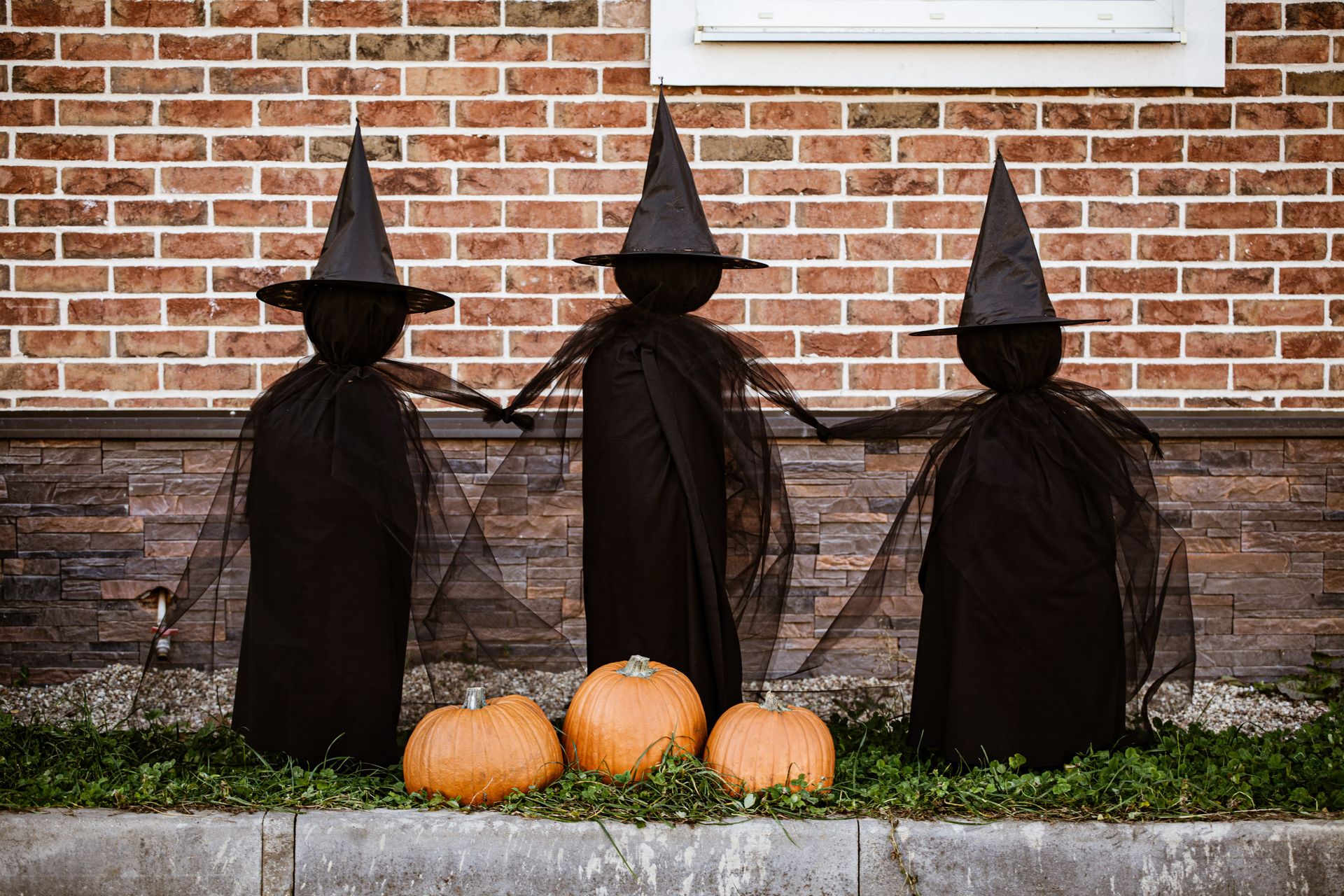
Before you buy the costume: the hooked nose and green face are mostly a twentieth-century invention, fixed in place by Margaret Hamilton in 1939. The hat’s origins are murkier, owing something to old woodcuts and rather more to old assumptions about country women. It doesn’t ruin Halloween, though it adds a layer. The silhouette on your porch was assembled out of a caricature of people who lost everything.
One Question to Sit With
Try this exercise before answering the title’s question. If you had been born in a village in 1650, where the minister believed, the magistrate believed, and your mother believed, what would you have believed?
Nearly everyone assumes they’d have been the skeptic, and nearly everyone is wrong. That is the real answer to the title’s question: whether witches were real depended less on witches than on who was believing, and how sure the people around them were. It is a cheap thing to notice and a useful one to carry into any season that trades on fear.
Support Halloween Love
If an item was discussed in this article that you intend on buying or renting, you can help support Halloween Love and its writers by purchasing through our links:
