
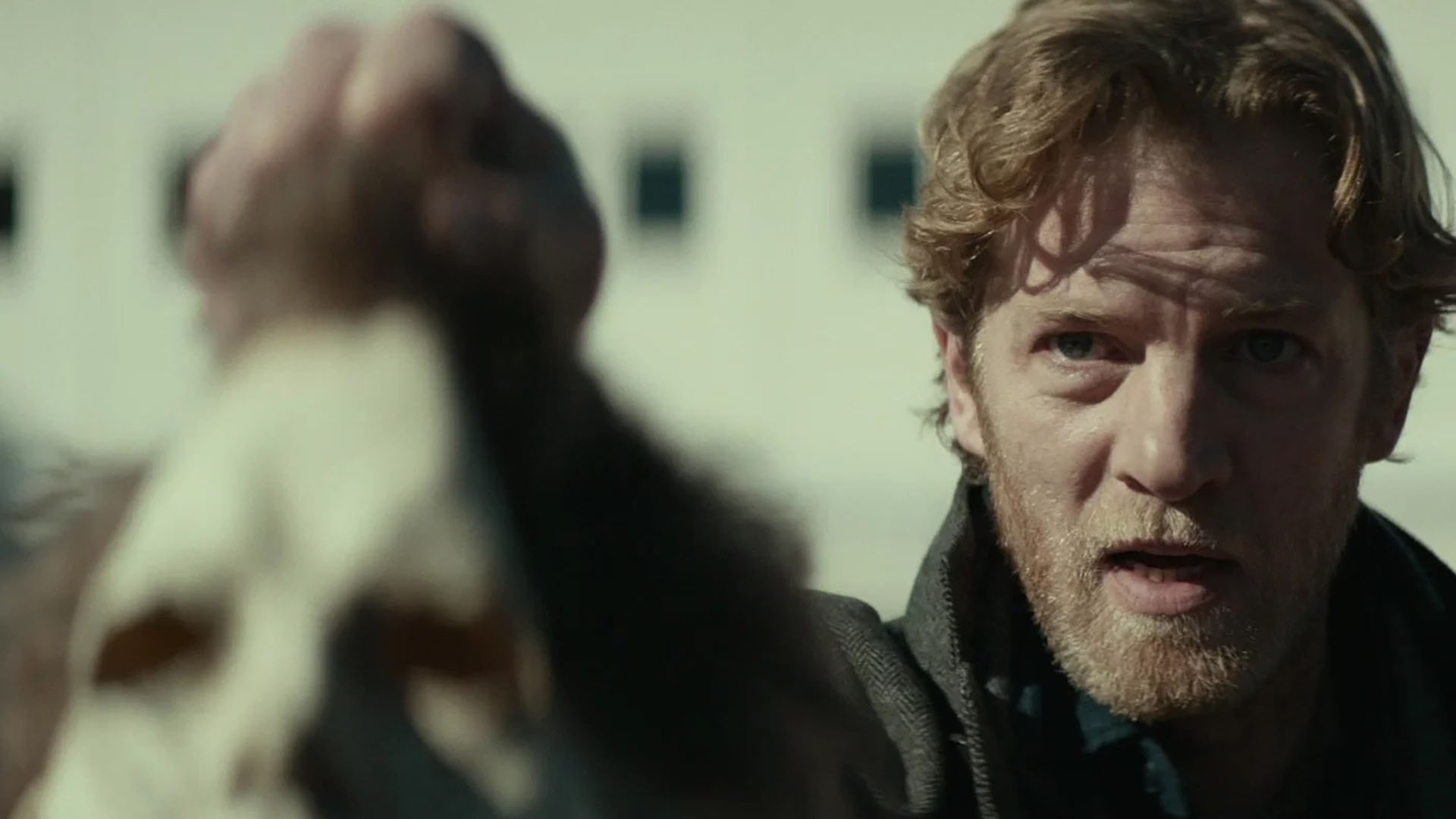
By 2018, Michael Myers had survived almost every indignity a horror franchise could inflict on its central villain. He had been killed, resurrected, retconned, recast, placed inside a reality television experiment, and pulled through multiple timelines that contradicted one another. The white mask remained instantly recognizable, but the mythology surrounding it had become cluttered.
David Gordon Green’s Halloween did not solve that problem by adding more lore. It solved it by removing most of it.
The film discarded every sequel after John Carpenter’s 1978 original and returned to the simplest possible premise: Michael Myers escaped, and Laurie Strode knew he would come back. That decision allowed the filmmakers to make a direct continuation for longtime fans while offering newer viewers a story that required almost no homework.
More importantly, the film understood that reviving a franchise is not the same as repeating it. It brought back the shape, the music and the autumn atmosphere, but it shifted the emotional centre of the story. Michael was still the threat. Laurie, however, was no longer simply waiting to be attacked.
It Cleared Away the Mythology Without Erasing the Past
One of the smartest choices in Halloween was its refusal to treat continuity as sacred. Rather than attempting to reconcile decades of sequels, the film established that only the events of the original had happened. Michael was not Laurie’s brother. The Thorn mythology was irrelevant. Haddonfield had not endured a long series of annual massacres.
This reset restored something the sequels had gradually weakened: Michael’s lack of explanation.
The brother-and-sister twist introduced in Halloween II gave his obsession a clear motive, but it also made him smaller. He was no longer an unknowable figure who had chosen a teenage stranger for no discernible reason. He had become a relative pursuing a family target.
The 2018 film deliberately rejects that connection. Characters mention the supposed relationship only to dismiss it as a rumour. Michael does not return because destiny requires a family reunion. Other people physically bring him back into Laurie’s orbit.
That distinction matters. Laurie has spent four decades preparing for Michael, yet he may not have spent those years thinking about her at all. Her trauma gives their encounter meaning. His emptiness refuses to provide the same comfort.
The film also respects the original without turning every reference into a congratulatory wink. Familiar images appear in altered forms. Laurie looks down from a balcony and disappears when Michael checks again. A young boy named Julian is more alert and entertaining than many traditional slasher victims. The final confrontation transforms Laurie’s isolated home into a trap she has designed herself.
These echoes reward recognition, but they usually serve the story rather than interrupt it.
Laurie Strode Became the Reason to Continue the Story
Jamie Lee Curtis had returned to the franchise before, most notably in Halloween H20, but the 2018 film gave Laurie’s survival a different weight. She was not presented as someone who had successfully escaped the past. She was presented as someone whose entire adult life had been shaped by the expectation that the past would return.
Her house resembles a fortress. Her relationships have deteriorated. Her daughter Karen remembers a childhood defined by survival training rather than safety. Laurie’s granddaughter Allyson knows the family story, but she has not yet decided how much of it she believes.
This turns the film into more than another rematch between a masked killer and a final girl. It becomes a story about trauma moving through generations.
Laurie’s preparation has protected her in one sense and damaged her in another. She is correct that Michael remains dangerous, but being correct does not erase the cost of living as though every day is the night he escapes. The film does not romanticize her isolation. It allows her competence and her dysfunction to exist together.
That complexity gave the sequel an emotional foundation stronger than nostalgia alone. Viewers were not simply returning to see Michael stalk suburban streets. They were returning to see what Laurie had become and whether decades of fear would finally give her an advantage.
The commercial response reflected how successfully the film connected an old horror identity with a contemporary audience. Discussions of the Halloween (2018) movie performance are especially revealing because the release was not merely a respectable comeback for a familiar title; it demonstrated how valuable a focused concept, controlled budget and recognizable character could still be when supported by genuine audience interest.
Its success did not come from making Halloween bigger in every possible way. It came from making the central conflict matter again.
Michael Myers Was Frightening Because the Film Restored His Simplicity
Later sequels often struggled with escalation. Once Michael had survived enough injuries and accumulated enough history, filmmakers were tempted to explain him, strengthen him or surround him with increasingly elaborate mythology.
The 2018 film mostly resists that urge.
Michael is older, but he is not treated as a nostalgic celebrity inside the story. The mask may be iconic to the audience, yet the film presents it as a decaying object that becomes disturbing only when he puts it on. His movements remain patient and practical. He walks through houses, backyards and streets as though violence is simply the direction he has chosen.
The long sequence following him through Haddonfield on Halloween night is particularly effective because it does not announce a grand objective. He moves from one potential victim to another. Some people notice him. Others do not. Porch lights, costumes and trick-or-treaters make his presence both visible and easy to dismiss.
That is the old Halloween tension: evil standing in an ordinary place, noticed one second and gone the next.
The film does occasionally lean into brutality more heavily than Carpenter’s original, but it avoids turning Michael into a talkative mastermind or a monster burdened by exposition. Even the journalists who attempt to provoke a reaction from him fail. They want meaning, recognition or communication. Michael gives them nothing.
By protecting that silence, the film restored the character’s power.
It Revived the Franchise by Completing a Story
There is an irony at the heart of Halloween (2018). Its success launched another trilogy, yet the film works because it feels capable of standing alone.
The final confrontation has the structure of an ending. Three generations of Strode women cooperate. Laurie’s training, Karen’s performance of vulnerability and Allyson’s determination all become necessary. Michael is trapped beneath the house as flames rise around him. Laurie is wounded, but she is no longer helpless or alone.
The final image of Allyson holding the bloodied knife suggests that the encounter will leave another mark on the family, but it does not demand an immediate sequel. The story has reached an emotional stopping point.
That sense of completion separates the film from franchise entries that exist mainly to preserve future installments. Halloween was willing to stage a decisive confrontation, and that made the possibility of continuation feel earned rather than compulsory.
Its revival strategy was therefore surprisingly disciplined. Remove the continuity that no longer helps. Keep the visual and musical language audiences remember. Give the returning hero a meaningful evolution. Let the villain remain unexplained. Build toward an ending instead of an advertisement for the next chapter.
Michael Myers may always come back. Halloween (2018) succeeded because it gave audiences a reason to care when he did.
Support Halloween Love
If an item was discussed in this article that you intend on buying or renting, you can help support Halloween Love and its writers by purchasing through our links:
