
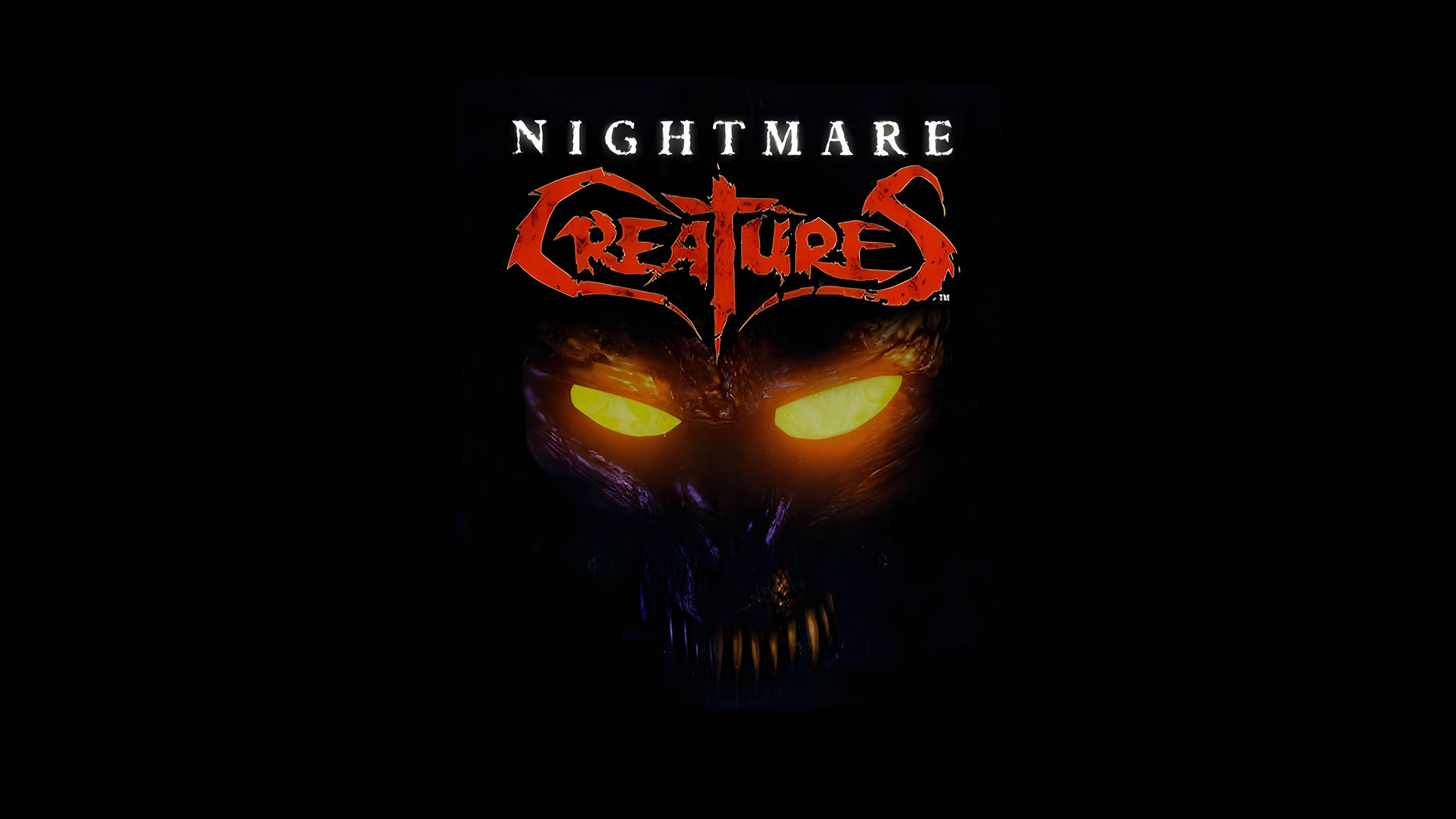
I have a very specific memory of renting Nightmare Creatures from a video store in Salem on a Friday night in the fall of 1997. I remember the box art. I remember the way the PlayStation loaded it. I remember the first time a creature lunged out of the London fog at Father Ignatius Blackward and I scrambled for the attack button.
I also remember not sleeping particularly well that weekend, which I consider high praise.
The game was rough around the edges in ways that even a teenager could identify, the camera was unreliable, the combat was repetitive if you let it be, and the frame rate had opinions about how many polygons it was willing to render at once. None of that mattered. What mattered was the atmosphere. Kalisto Entertainment, a small French studio out of Bordeaux, had modeled their 1834 London from actual 19th-century maps and blueprints, and it showed. The streets felt like streets. The fog felt like fog. The monsters felt like things that had no business existing in the same world as you.
I played the sequel too, when it came out in 2000. We will get to the sequel.
The point is: this series deserved a third game. It got one, almost. And then it didn’t. And then the studio died. And then the IP fell into a legal fog it has never quite emerged from. And I have been annoyed about it for twenty-five years.
Let me tell you the whole story.
The First Game (1997): A Gothic Horror Landmark That Nobody Quite Knew What to Do With
Nightmare Creatures was released on PlayStation on October 31st, 1997, in North America, which is exactly the right day to release a game about monsters eating people in Victorian London. The Windows version followed in December, and the Nintendo 64 version arrived a year later in November 1998. Activision published it in North America; Sony Computer Entertainment handled Europe.
The premise: a cult called the Brotherhood of Hecate, led by an occultist named Adam Crowley (the name is not subtle), has been conducting experiments to unlock superhuman power. The experiments work, in the sense that they produce hideous mutant creatures. The Brotherhood then does what any sensible cult would do and unleashes the creatures on London. Two monster hunters respond: Father Ignatius Blackward, a priest with a staff, and Nadia Franciscus, a gymnast with blades. You pick one and fight your way through the city.
The adrenaline bar is the game’s most interesting mechanic: it drains over time, and if it empties you start losing health. The only way to keep it full is to keep fighting. The game is actively punishing you for standing still. This is, in retrospect, a very specific design philosophy that a certain Japanese studio would revisit eighteen years later, but more on that in a moment.
Critically, the game landed somewhere between “good” and “divisive.” The PlayStation version reviewed well (around 78% on GameRankings), with reviewers praising the atmosphere and monster design and arguing about whether the combat was satisfying or repetitive. Electronic Gaming Monthly’s four reviewers split almost perfectly down the middle. GameSpot was lukewarm. IGN concluded that the positives outweighed the negatives. GamePro was effusive.
What everyone agreed on was that it sold. Over 1.5 million units across all formats by January 2000. For a first release from a small French studio using its own proprietary engine, that is a remarkable number. Kalisto had a franchise on their hands.
The Second Game (2000): How Not to Follow Up a Hit
Nightmare Creatures II arrived in May 2000 on PlayStation, with a Dreamcast version following in June. The publisher had changed to Konami. The development team had grown from around 15 people on the first game to over 40. The budget was larger. The ambitions were broader. The result was worse in almost every meaningful way.
The game jumped forward a century to 1934, following an amnesiac test subject named Herbert Wallace who escapes from Adam Crowley’s facility and fights his way across London and Paris armed with an axe. The adrenaline bar was gone. The two-character system was gone. In their place, a single protagonist, a set of gory finishing moves, and a licensed Rob Zombie soundtrack in the North American PlayStation version, which was either a selling point or a red flag depending on your feelings about Rob Zombie soundtracks in horror games.
The reviews were not kind, particularly to the Dreamcast version, which one critic described by quoting Carly Simon at length. The PlayStation version averaged around 64% on GameRankings. The Dreamcast version landed around 49%. IGN’s scores were inconsistent across versions, suggesting the ports were uneven. EGM gave the PlayStation version a spread of 4/10, 4.5/10, and 6/10 from three reviewers.
The honest assessment: the team had made the sequel without knowing how the original had actually performed (this was the pre-broadband era; sales data moved slowly), and had overcorrected for problems that may not have been as serious as they assumed. They removed mechanics that were distinctive in an attempt to smooth out rough edges, and ended up with something that felt generic where the first game had felt strange and specific. Strange and specific was the whole point.
No reliable sales figures for the sequel exist publicly. Given the critical reception, it is reasonable to assume it underperformed relative to the original.
That said, I played the sequel too, and I will admit that I have a soft spot for it that the reviews probably do not justify. Herbert Wallace is not as interesting as Ignatius or Nadia, and the removal of the adrenaline bar takes something essential out of the combat. But the 1934 setting has its own grim atmosphere, the finisher moves are genuinely satisfying in a way that feels slightly wrong to admit, and there is something about fighting your way up the Eiffel Tower at the end that I cannot bring myself to be entirely dismissive of. It is a worse game than the first. It is still a Nightmare Creatures game though, which means it is still doing something most games of its era were not doing at all.
Nightmare Creatures III: Angel of Darkness (The One That Got Away)
Development on a third game began at Kalisto around 2002. The concept was genuinely interesting: set in 19th-century Prague, with a female protagonist who could merge with her pet raven at night to transform into a beast and hunt Crowley’s monsters through the city. Ubisoft held publishing rights. A Spring 2003 release was announced for PlayStation 2, GameCube, and Xbox.
Then Kalisto went bankrupt.
The company’s collapse was swift and ugly. Rapid overexpansion during the dot-com boom, a disastrous acquisition of a Texas-based studio in 2000, a share price that cratered, and a refinancing plan blocked by French regulators. By 2002, Kalisto was liquidating. Around 350 employees were out of work. The founder, Nicolas Gaume, was later fined by French financial regulators for repeatedly misleading shareholders about the company’s condition.
When Kalisto collapsed, Ubisoft assumed development of Nightmare Creatures III and reportedly began a significant redesign. Spring 2003 came and went. In 2004, a Ubisoft representative told inquiring fans the game had not been cancelled. Then Ubisoft went quiet. The game has never appeared. It is, for all practical purposes, gone.
What survives: some concept art, credited to artist Arthur Hugot (who lists “Nightmare Creatures III Pre-Production (Xbox) at Ubisoft” in his portfolio), plus additional design work attributed to Pascal Barret that circulated on fan forums. A low-quality gameplay video surfaced on YouTube at some point. No prototype build has ever leaked publicly. For a game that was actively in development at a major publisher for at least two years, the evidentiary record is almost nothing.
The Bloodborne Question
It is impossible to write about Nightmare Creatures in 2026 without addressing the comparison that every horror gaming outlet has made at least once, that FromSoftware’s Bloodborne (2015) is the spiritual successor this series never got to be.
The similarities are real and they are striking. Gothic Victorian setting. A city consumed by monstrous plague. Melee-and-firearm combat against creatures drawn from folklore and nightmare. An emphasis on aggression over caution, punishing players who stand still. A heavy atmosphere of occult conspiracy and creeping dread. Bloody Disgusting titled their Bloodborne review “Nightmare Creatures” as a direct reference. The Gamer ran a piece headlined “If You Miss Bloodborne, Play Nightmare Creatures.” CBR argued that a Nightmare Creatures reboot would be “perfect for Bloodborne fans.”
Here is the important clarification: there is no shared DNA. No Kalisto staff moved to FromSoftware. Hidetaka Miyazaki has not cited the series as an influence in any interview on record. The resemblance is a parallel evolution, two studios on opposite sides of the world independently arriving at a similar concept, one in 1997 and one in 2015, with dramatically different results in terms of execution, critical reception, and legacy.
What the comparison actually demonstrates is that Kalisto was onto something real. The gothic monster-hunting formula worked. Bloodborne proved there was an enormous audience for exactly this kind of game, an audience that existed in 1997 but that the tools and genre conventions of 1997 could not fully serve. Nightmare Creatures was ahead of itself. That is not the same as being bad. That is, in some ways, worse.
The IP Situation: It is Complicated and Also Unfortunate
When Kalisto liquidated, its intellectual properties were scattered. The core Nightmare Creatures IP has no clear publicly documented active rights-holder today. Activision published the first game but did not own the IP. Konami published the second but did not own the IP. Ubisoft held publishing rights to the third but appears to have let them lapse along with the project.
The most recent serious revival attempt came in September 2017, when a small studio called Albino Moose Games announced at PAX West that they were developing a new Nightmare Creatures. Their lawyer had confirmed that Activision’s trademark had lapsed and the name was available. They filed a US trademark on July 6th, 2017. By August 6th, 2018, that trademark had been abandoned for failure to file a statement of use.
On May 13th, 2020, Albino Moose tweeted one word about the project: “Shelved.” A Facebook follow-up explained they had models, a story, a storyboard, and a prototype level halfway complete, but could not secure funding to continue. They remain a tiny studio focused on other projects.
If you have recently seen an article claiming that Bandai Namco and Albino Moose are co-developing a Nightmare Creatures remake for early 2026, that story originated from a Wix hobby blog with stock-photo staff and no editorial credibility, and has been corroborated by exactly zero reputable outlets. It is not real.
Neither game is available for legal digital purchase anywhere. No Steam listing, no GOG listing, no PSN listing. You can find physical copies on eBay for anywhere from reasonable to genuinely offensive prices depending on the day, or you can find the PC version preserved on the Internet Archive. The Dreamcast prototype of the second game has been preserved and dumped by the emulation community, complete with debug options. That is, genuinely, the state of preservation for a franchise that sold over 1.5 million copies.
The Case for a Remaster (And Why it Could Actually Work)
Here is the thing about the Nightmare Creatures IP situation that tends to get lost in the general melancholy: it is not impossible. It is just complicated.
The central legal requirement is establishing a clear chain of title, finding out who actually holds the core IP rights after Kalisto’s liquidation and securing them. This is not a trivial task but it is not an unprecedented one either. Publishers and lawyers do this work routinely for dormant properties. The trademark is lapsed and available. The licensed content in the second game (the Rob Zombie tracks) would need to be renegotiated or removed, but that is a standard clearance problem.
What would the result look like? I am not envisioning a full-blown modern remake with a new engine and a new combat system. I am thinking of something closer in spirit to what Aspyr did with the original three Tomb Raider games in 2024: faithful remasters that improve resolution, frame rate, and controls without reimagining what the games fundamentally are. Nightmare Creatures with a stable camera, a locked 60 frames per second, and modernized controls would be a different experience than the original in the best possible way. The atmosphere does not need rebuilding. The monster designs do not need rethinking. The Victorian London streets, modeled from actual 19th-century maps by a team that cared about getting them right, do not need replacing. They need to be made visible.
The audience exists. Bloodborne proved the audience exists. Every piece that gets written comparing the two games generates engagement, nostalgia, and genuine appetite from people who have never played the originals. The barrier is legal and financial, not commercial. There is a fan base waiting. There is a proven genre formula. There are two complete games sitting in a legal fog, unavailable to purchase, being actively sought on the secondhand market.
Someone should rescue them.
I have been waiting since 1997. I have learned to be patient. I have not learned to stop wanting it.
💜 Now if you’ll excuse me, I have fog to walk into.
Support Halloween Love
If an item was discussed in this article that you intend on buying or renting, you can help support Halloween Love and its writers by purchasing through our links:
