
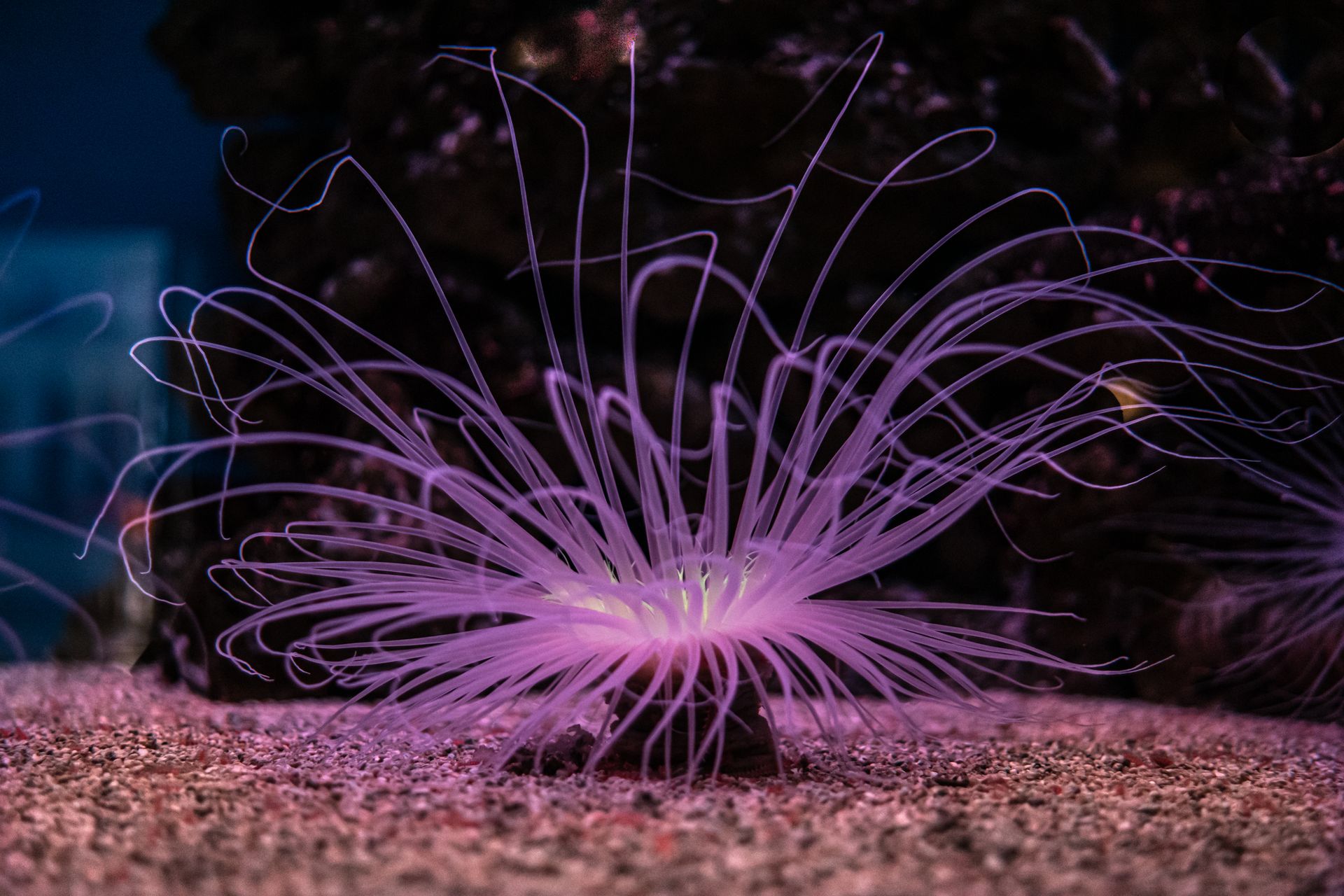
Space gets most of the cosmic horror credit. Lovecraft pointed his telescope at the stars, filmmakers filled the void with xenomorphs and monoliths, and the phrase “we are not alone” became shorthand for existential dread. But the ocean has been quietly doing the same work for longer, with less fanfare and considerably more teeth.
The deep sea is the closest thing Earth has to an alien world. Below a few hundred meters, sunlight disappears completely. Pressure builds to levels that would crush an unprotected human body. Temperature drops toward freezing. And in that darkness lives some of the strangest, most genuinely unsettling life on the planet: creatures with no eyes, creatures that generate their own light, creatures with transparent bodies, creatures with mouths too large for their heads, creatures that have never been seen alive by a human being.
Horror has always understood this. From 20,000 Leagues Under the Sea to The Abyss to Underwater to the entire deep-sea creature-feature genre, the ocean’s darkness has been a reliable source of dread. The reason isn’t hard to find: the ocean is a place where the rules change, where human dominance means nothing, and where almost everything that lives there either wants to eat you or is indifferent to your existence in a way that feels worse.
The Creatures Horror Movies Got Right
Real ocean biology is sometimes more disturbing than anything screenwriters have invented. A few genuine highlights:
- The anglerfish dangles a bioluminescent lure in absolute darkness to attract prey and looks exactly like something a special effects team would design for a horror film. The deep-sea version is almost entirely mouth.
- The giant squid wasn’t confirmed as a real species until 2004. Before that, centuries of sailors described a creature large enough to drag ships under, and the scientific establishment treated it as folklore. They were wrong.
- The barreleye fish has a transparent head. Its tubular eyes point upward through a clear dome of fluid to detect the silhouettes of prey above it. It looks like a prototype for a creature in a science fiction film.
- The Greenland shark lives for up to 500 years, moves slowly through the Arctic deep, and has been found with the remains of polar bears and horses in its stomach. It is almost completely blind, its eyes destroyed by a parasitic crustacean that lives on them.
None of these required any creative embellishment. The ocean invented them independently.
Fighting Back from the Safety of a Screen
There is a long tradition in horror of confronting fear by proxy. You watch someone else deal with the monster. You play through the scenario yourself at a safe remove. You process the dread in a controlled environment where the worst that can happen is you close the tab.
ka fish hunter social casino slot game works on a version of that principle. You’re shooting at fish. The targets are colorful, the controls are responsive, and the reward system delivers that arcade-style loop of immediate feedback followed by escalating stakes. It’s not trying to be Underwater. But it puts you in the position of the one doing the hunting rather than the one being hunted, which is a psychologically different place to stand.
The game combines precise aiming mechanics with a reward structure that echoes slot machines: micro-rewards for regular hits, high-value sequences triggered by specific in-game conditions. Players who enjoy the format can also check out the king octopus slot for a different take on ocean-themed gameplay, or coin volcano free to play for something in a different direction entirely within the same lobby.
The Reward Structure
KA Fish Hunter’s design creates a layered rhythm: frequent smaller rewards keep the session moving, while high-stakes sequences reserved for specific in-game conditions create the kind of dramatic peaks that make a session memorable rather than routine.
| Reward Type | Trigger | Effect |
|---|---|---|
| Micro-rewards | Regular target hits | Immediate feedback, maintains momentum |
| High-value sequences | Specific in-game conditions | Heightened excitement, substantial payouts |
Why Deep Sea Horror Works
The most effective horror operates in spaces where the normal rules don’t apply. Haunted houses work because the home is supposed to be safe. Space horror works because human survival systems fail completely. Ocean horror works because water itself is a foreign medium, one where humans are slow, half-blind, and breathing borrowed air.
The creatures that live there didn’t evolve alongside us. They don’t recognize us as apex predators. They don’t recognize us at all. A great white shark does not find a human swimmer particularly interesting. A giant squid, if it encountered one, would not distinguish between a human diver and anything else of approximately the same size and heat signature.
That indifference is more disturbing than malice. Horror that features a creature actively hunting humans at least implies the humans matter. The deep sea offers no such comfort. Down there, you’re just another thing that exists, briefly, until you don’t.
The arcade format of KA Fish Hunter inverts that dynamic entirely. The fish are the targets. The player has the firepower. It’s not realistic, but it scratches the same itch that monster movies do: the fantasy of being the one with the advantage, for once, in a world that usually offers none.
Support Halloween Love
If an item was discussed in this article that you intend on buying or renting, you can help support Halloween Love and its writers by purchasing through our links:
