
Lighting sets the mood before anyone notices a single prop. A cheap skeleton looks great under the right beam. An expensive animatronic looks flat under a bare porch bulb.
The National Retail Federation reported record Halloween spending of $13.1 billion in 2025. A big share of that goes to decor. Smart lighting helps you get more from every piece you already own.
Start With Color Temperature
Color temperature is measured in Kelvin. Warm white bulbs sit near 2700K. Daylight bulbs run 5000K or higher. Neither feels spooky.
Push your palette to the extremes. Deep red, purple, and toxic green work best. Cool blue mimics moonlight and makes fog look colder.
Limit each scene to two or three colors. More than that looks like a party, not a haunt.
Use Uplighting to Distort Faces and Props
Light from above feels natural. Light from below does not. Place a small LED spotlight at ground level and aim it up at a figure, tree, or facade. Shadows fall in the wrong direction. That is the classic horror effect.
Keep beam angles narrow. A 15 to 30 degree spot creates a tight pool of light. Wide floods wash out detail and kill contrast.
Contrast matters more than brightness. Dim the surrounding area and let one prop glow.
Add Custom Neon Signs for a Bold Focal Point
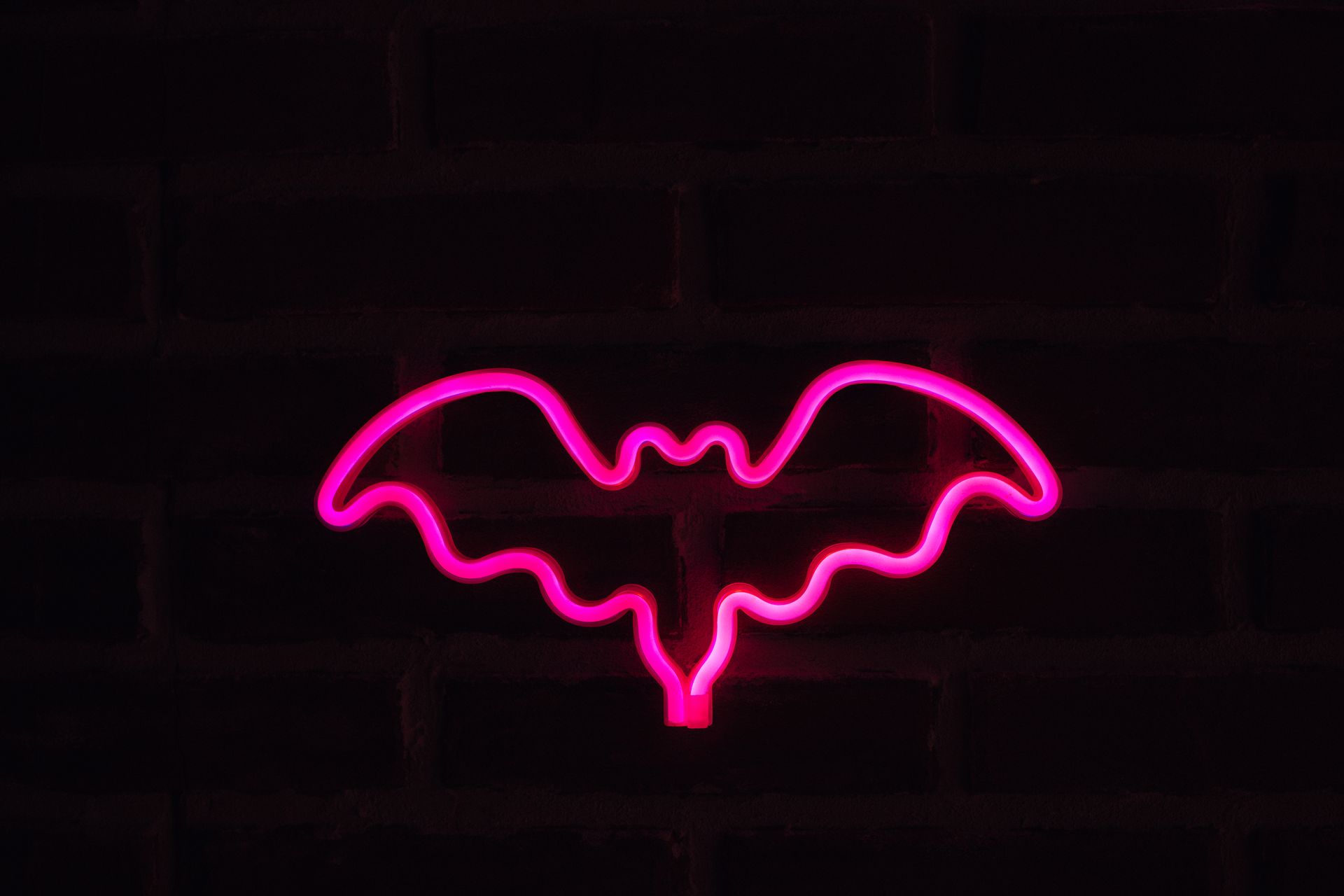
Static props need a hero piece. Custom neon signs give you a glowing centerpiece in any color you pick. A “Boo” or “Enter If You Dare” sign in blood red reads from the street. LED neon flex draws little power and runs cool, so it stays safe near costumes and fabric. Hang it on a porch wall, inside a window, or over a party bar cart.
Match the Fixture to the Location
Outdoor lighting needs weather protection. Check the IP rating on the package. IP44 handles splashes. IP65 handles rain and hose spray. Use IP65 or better for anything exposed to the elements.
Choose fixtures by job:
- Spotlights: uplight trees, walls, and large props.
- String lights: outline rooflines, railings, and fences.
- Color gel floods: wash a whole facade in one color.
- Fog lights: pair a colored LED with a fog machine.
- Flicker bulbs: mimic candlelight in windows and lanterns.
Build Motion Into the Scene
Static light gets boring fast. Motion holds attention.
Flicker bulbs use a random dimming pattern. Put them in lanterns and porch fixtures.
Strobes work, but keep them short. Constant strobing can trigger photosensitive reactions. Post a small warning if you use one.
Fog changes everything. A fog machine turns a light beam into a visible column. Low-lying fog machines keep mist near the ground, where uplights catch it. Use water-based fluid and run the machine in short bursts.
For bigger setups, DMX controllers sync color, dimming, and timing across many fixtures. Wi-Fi controllers do a similar job for smaller yards.
Watch Your Power Load
Spooky lighting fails fast when a breaker trips. A standard 15-amp household circuit handles about 1,800 watts. Stay under 80 percent of that, or roughly 1,440 watts.
LED fixtures help. A 10-watt LED spot can replace a 75-watt halogen. That leaves room for fog machines, which can pull 400 to 1,000 watts while heating.
Follow these safety basics:
- Use outdoor-rated extension cords with 16-gauge wire or thicker.
- Plug into GFCI outlets.
- Keep connections off wet ground with stakes or cord covers.
- Put everything on a timer or smart plug.
Light the Path for Trick-or-Treaters
Safety still comes first. Kids need to see steps, cords, and curbs. Use low-output path lights in orange or purple. Aim for about 50 to 100 lumens per fixture. Space them 4 to 6 feet apart. Keep cords out of walkways.
Hide fixtures behind bushes and props when you can. You want the glow, not the bulb.
Test Before Halloween Night
Set everything up a few days early. Test at dusk and again after dark. Walk the sidewalk and check sightlines from the street. Adjust angles until glare disappears.
Take photos with your phone. Cameras show blown highlights and dead zones your eyes miss.
The Bottom Line
Good Halloween lighting comes down to contrast, color, and control. Pick one or two colors. Uplight your best props. Add one bold focal piece. Keep the power load safe. Then let the shadows do the work.
Support Halloween Love
If an item was discussed in this article that you intend on buying or renting, you can help support Halloween Love and its writers by purchasing through our links:
