
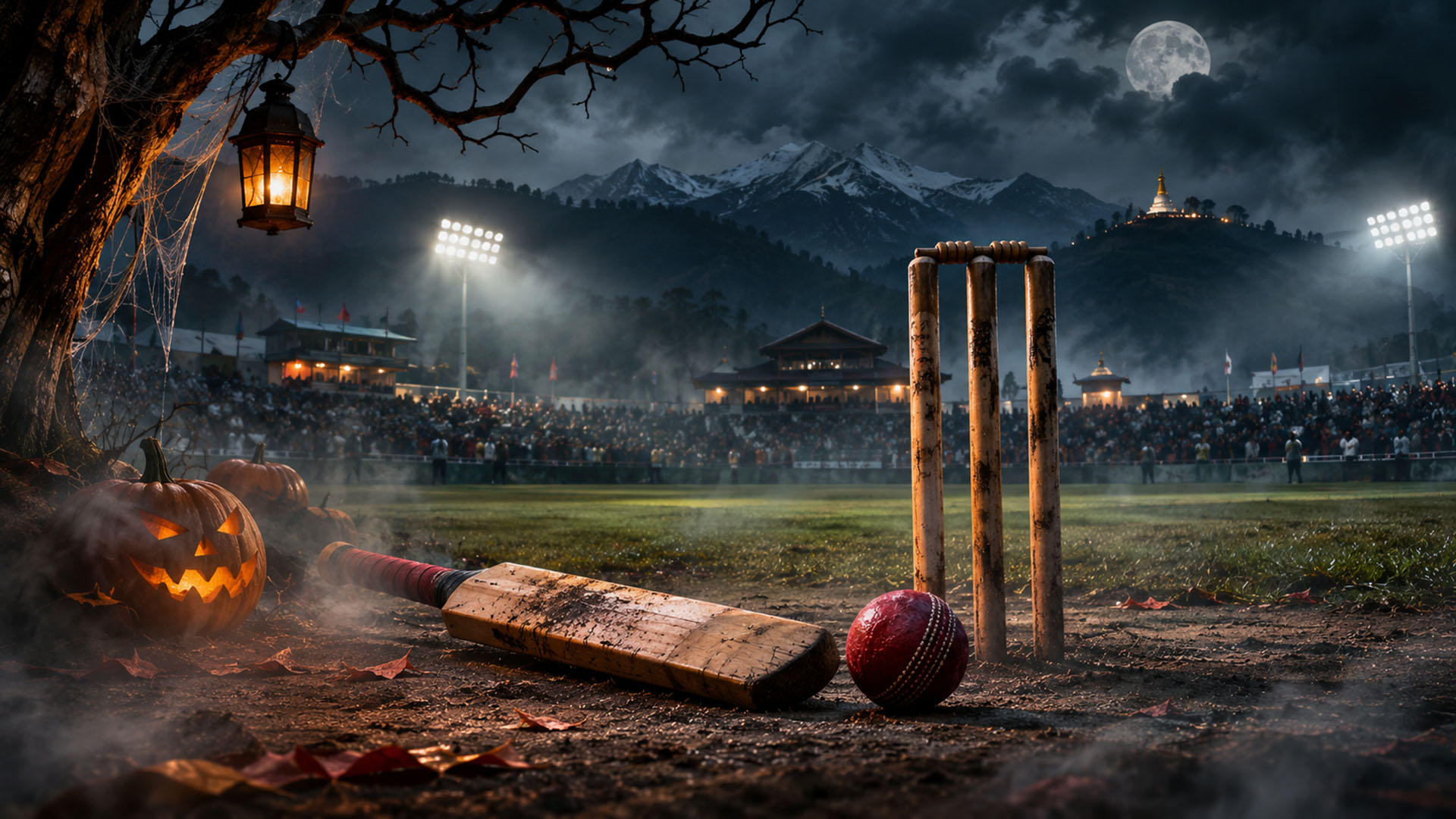
A stadium goes quiet just before the final ball. Thousands of people are watching, yet for a moment the crowd seems to disappear. Nobody knows whether the next delivery will produce a boundary, a wicket or an anticlimactic dot ball. It is not a horror scene, but the tension feels surprisingly familiar: the held breath, the heightened attention and the sudden release when something finally happens.
That same emotional rhythm powers a haunted-house attraction, a suspense film and a well-designed horror game. The setting changes, but the audience is still waiting for an uncertain event. Halloween gives us a good excuse to look at why that feeling can be so entertaining.
The Scariest Moment is Often the Wait
Think about a corridor in a survival-horror game. The lights flicker, a floorboard creaks and the music drops away. Nothing attacks the player. That absence is the trick. Once the game has established the possibility of danger, the imagination fills the silence with possibilities worse than anything on screen.
Sport can create a similar pause without pretending to be frightening. In a tight T20 cricket match, a bowler preparing for the last over leaves spectators with several plausible outcomes and very little time to resolve them. Supporters know the rules, but not the ending. In both cases, anticipation makes ordinary details feel unusually important.
Why Sound and Setting Change Everything
Horror filmmakers use distant footsteps, low drones and abrupt silence to tell viewers when to worry. Stadiums have their own soundtrack: drums, chants, commentators and the collective intake of breath when a shot hangs in the air. A packed ground at night can feel theatrical even without a single Halloween decoration.
Nepal’s cricket culture offers an especially vivid example of how a crowd becomes part of the story. At the Tribhuvan University ground in Kirtipur, regional franchise identities meet in one shared venue. The tension comes from rivalry, atmosphere and the uncertainty of a short-format match, not from anything supernatural.
For a Halloween watch party, these ingredients are easy to borrow. Dim the room, use a dramatic introduction, invite friends to predict a turning point and let the game or film do the rest. The atmosphere matters more than an elaborate prop budget.
Horror Games Give Uncertainty a Face
Interactive horror makes suspense personal. A film viewer can look away, but a player often has to open the suspicious door or walk down the unlit staircase. Limited resources, unpredictable encounters and incomplete information force decisions under pressure. The best games alternate between calm exploration and brief bursts of danger, so players never settle into a comfortable rhythm.
Halloween-themed digital entertainment also borrows familiar visual shorthand: haunted mansions, ravens, candles, skeletons and gothic lettering. These elements signal a spooky mood, but they do not automatically make an experience scary. The stronger designs understand pacing, contrast and what the audience expects to happen next.
The Difference Between a Sporting Outcome and a Random One
Suspense does not mean every activity works by the same rules. A cricket result emerges from player performance, tactics, weather and match conditions. Before a close contest, some adults may visit a betting site to view the markets being offered, but prices are not guarantees and the excitement of a match should not be mistaken for a reliable prediction.
A slot game is different. Someone browsing a casino game online real money selection may encounter Halloween imagery, but the artwork has no power over the outcome. Results depend on the game’s underlying random-number system and rules, not on a player’s instincts or the dramatic timing of an animation. Published return-to-player figures describe long-run mathematical averages, not what an individual session will pay back.
That distinction is worth keeping clear. Horror stories deliberately manipulate our expectations for entertainment; neither sports betting nor casino play becomes predictable because it feels familiar. Anyone choosing to gamble should follow local laws, set firm spending limits and treat losses as a possible cost, not something to chase.
Build a Halloween Night Around the Suspense
A memorable spooky evening does not require nonstop jump scares. Start with a tense match replay or a dramatic sporting moment, move into a short atmospheric horror game and finish with a classic film that knows how to use silence. The connections become obvious once you pay attention to pacing: the buildup, the false alarm, the reveal and the relief.
It is also a fun way to compare different kinds of audience participation. Sports fans shout at a screen because the result matters to their team. Horror-game players hesitate because their next button press may trigger something dreadful. Film viewers know they cannot change the ending, yet still lean forward when a character reaches for a door handle.
The Pleasure of Not Knowing
Halloween celebrates the strange pleasure of feeling unsettled in a setting we have chosen. Sport, horror cinema and games can all deliver a version of that pleasure, although they reach it through very different systems. What connects them is the space between expecting something and finding out what happens.
Sometimes the monster appears. Sometimes the final ball clears the boundary. And sometimes nothing happens at all, which, in the right atmosphere, can be the most suspenseful ending of the night.
Support Halloween Love
If an item was discussed in this article that you intend on buying or renting, you can help support Halloween Love and its writers by purchasing through our links:
